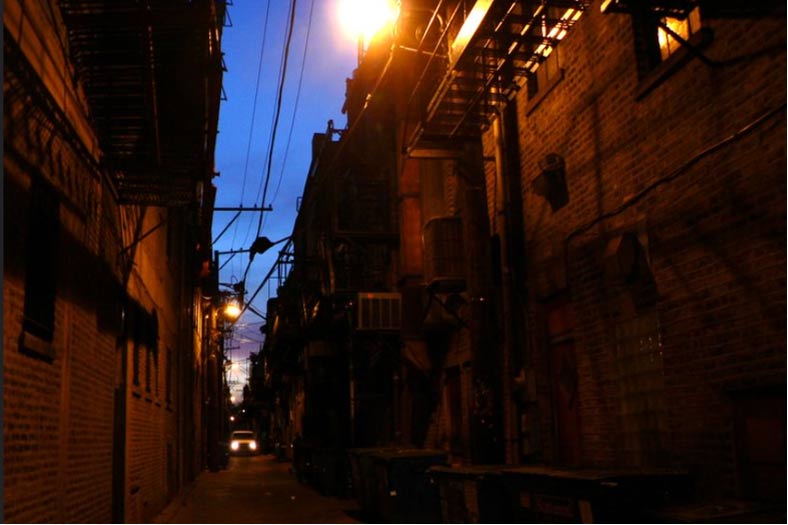
Amongst other things, the Windy City is famous for its iconic skyline, delicious deep-dish pizza, and thriving blues and jazz scene. However, beneath the surface of the bustling metropolis that is Chicago lies a chilling mystery. Over the last two decades, over fifty women have been found strangled in the city’s abandoned buildings and alleyways, nearly all of them women of color. Despite the striking similarities among the cases, the Chicago police refuse to entertain the idea that these cases might be related. Could a serial killer be stalking the Windy City? Some amateur crime sleuths believe so, and their argument is pretty compelling.
- 5 Most Brutal Serial Killers in Recent History
- Dr. Satan: The Terrifying French Serial Killer Of Ww2 Paris
Who Were the Victims of the Chicago Strangler?
If the Chicago Strangler does indeed exist, his victims span a tragic demographic, primarily comprised of African Americans with a history of sex work and run-ins with the justice system. Over 50 women, ranging in age from their late teens to late 50s, have been found dead in Chicago’s alleyways and abandoned buildings between 2001 and 2018. The victims often led vulnerable lives, many struggling with substance abuse or engaging in sex work. These factors likely made them easier targets for the perpetrator(s), who seemed to prey on those marginalized by society.
Besides their similar profiles, the women were also found in similar conditions, often in isolated or abandoned locations like vacant lots, alleyways, and empty buildings. Nearly all the victims showed signs of death by strangulation or asphyxiation via methods such as having had a plastic bag put over their heads. More disturbingly, nearly all of them were found partially or fully stripped, and many showed signs of sexual assault.


Despite their varied backgrounds and age ranges, the common thread is their vulnerability and the brutal manner in which their lives were taken. The lack of significant forensic evidence has made it challenging to link these cases definitively to one another or a specific suspect, leaving families and communities in search of justice and answers. Some believe the deaths are the work of one mysterious man, the Chicago Strangler.
Arguments for the Serial Killer Theory
It’s easy to see why some have concluded that these deaths are the work of one individual. For a start, the victim profile sounds like the work of a serial killer. Nearly all the women could be described as “vulnerable” and had histories of sex work as well as criminal records. Furthermore, the fact that they were nearly all African Americans speaks to either a racist motive or perhaps some kind of sexual fixation.
Serial killers tend to stick to the same modus operandi and method of killing. The fact that nearly all the women were strangled and stripped to some extent seems relevant here. Furthermore, nearly all the victims were found outside or in places where they would easily be found. This detail is quite unusual for “normal” murders, less so for the work of a serial killer.
Finally, the method of killing suggests a specific and personal mode of murder. This again points to a particular modus operandi. Strangulation, which psychiatrists believe has a strong sexual element, is a common method of murder among serial killers driven by a sexual urge.
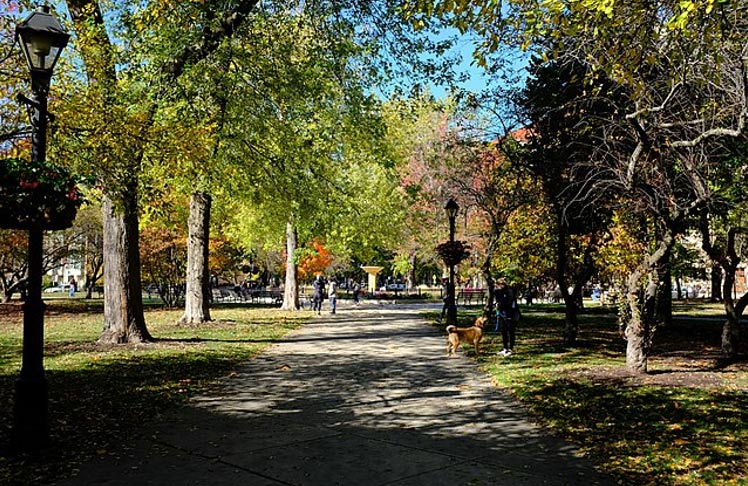
Outside of the killings themselves and a potential killer profile, the geographical patterns of the murders play a crucial role in the theory. Many of the murders occurred in just three police districts located on the south and west sides of Chicago. Areas like Washington Park and Garfield Park, known for their histories of violent crime and drug use, have been common locations for these murders. This clustering indicates that the killer may have a specific familiarity with these areas, potentially living or working nearby.
_Square,_Chicago.jpg)
Back in 2018, the Murder Accountability Project (MAP) reviewed the data on over 50 unsolved murders that involved strangulation or asphyxiation in Chicago since 2001. Their algorithm sorts the unsolved homicides by location, victim profile, and killing method and identifies clusters associated with low homicide clearance rates. According to MAP, these clusters are a strong indicator of serial killer activity in an area. It’s safe to say MAP’s algorithm found one heck of a cluster when reviewing these cases.
The folks at MAP have also argued that the timeline of the murders supports the single-killer theory. The killings paused from 2014 to 2017 before picking up again. This break suggests that the killer may have been briefly incarcerated or moved away and therefore unable to continue his activities.
Overall, the similarities in victim profiles, the method of killing, and the locations where bodies were found all contribute to the belief that one individual may be responsible for these heinous crimes. However, not everyone is convinced. In particular, Chicago’s police force has repeatedly fought back against the idea that they have a serial killer on their hands.
Arguments Against the Serial-Killer Theory
A serial killer on the loose might grab headlines, but there’s significant skepticism regarding the idea that the Chicago Strangler exists. Several credible factors contribute to this doubt.
Firstly, there’s no hard evidence linking all the cases. Although many of the victims were killed in similar ways and found in similar conditions, no concrete DNA or forensic links have been established. The police claim to have collected 21 DNA samples from half the crime scenes and have stated the DNA is different in every particular case. Considering the sexual element many of these killings share, one would expect the DNA to point at the same man if they were the work of a single killer.
Secondly, the police are beyond skeptical that the killings are the work of a serial killer. They have closed more than 20 of the cases and arrested 13 men (although only one case has been marked as solved). They have pointed to the high crime rates in the areas where the women were found to explain the murders. Criminologists and analysts have supported this argument.
The statistical perspective offered by criminologists and analysts suggests that the high number of unsolved murders in certain neighborhoods could be attributed to broader social and economic issues rather than the actions of one serial killer. Areas with elevated levels of violent crime, drug use, and poverty often experience lower homicide clearance rates, which could account for the clustering of these unsolved cases without necessitating a single perpetrator. The fact that nearly all the victims were “vulnerable” and had engaged in sex work also means they were statistically more likely to meet a tragic end.
Finally, the break in killings from 2014 to 2017 could be at least partly explained by changes in policing, community dynamics, or other external factors that temporarily reduced the opportunities for such crimes. A period of inactivity doesn’t necessarily point to one killer, even though this seems like the weakest argument against serial killer activity. A 3-year break is a pretty significant anomaly.
Conclusion
The mystery of the Chicago Strangler remains unsolved, with only one death officially marked as solved. Many of the other cases have been marked as closed, and the sad fact is that the Chicago police force doesn’t seem to be making solving the rest of them a priority.
While the debate about a single killer versus multiple murderers continues, there is arguably a bigger issue at play. Over 50 vulnerable women, most of them of color, have met grisly ends in Chicago over the last 20 years. The reasons offered by authorities as to why their murders remain unsolved are arguably even more disturbing than the idea of a serial killer stalking Chicago’s streets.
As John Fountain, a journalism professor at Roosevelt University, put it, “I am convinced that if there were 51 dogs killed in the city of Chicago, people would be up in arms, but we aren’t.” Because these victims were mostly of color, came from rough neighborhoods, and had criminal histories, society seems happy to ignore them. The sad fact is that if these deaths aren’t the work of a serial killer, then Chicago has the murder of 50 vulnerable women to answer for.
Top image: Alleyway in Chicago, USA Source: Sharat Ganapati/CC BY 2.0
References