
The end of the 19th century and the early years of the 20th century were a rough time for many inner city areas. The population boom driven by the Industrial Revolution had led to a marked increase in those living in cities, and slums, poverty and violence were common.
This was a period when mobs took control of many cities in the United States. Seizing on Prohibition as an opportunity, Al Capone, Bugsy Siegel, Russell Bufalino, and Machine Gun Kelly are some of the most well-known mobsters in US history. The United States isn’t the only country to have seen the rise of gangs in these early years.
England had its fair share of organized crime groups (often called firms) that dominated cities and economies for years. Gangs such as the Birmingham Boys, The Syndicate, and the A-Team became infamous on the streets of London for their fearlessness and their brutality.
But in amongst these, one of these gangs was a little different. Skilled in shoplifting thousands of pounds of merchandise at a time, the members of the 40 Elephants were skilled at their craft. Like many mobsters at the time, they also lived lavish and glamorous lives that set them apart from the general population in London.
But what made the 40 Elephants unique was that they were all women
The 40 Elephants
The 40 Elephants was an all-female crime syndicate known for their shoplifting skills during the 19th and 20th centuries in London, England. The gang’s founding is contested, but the organization is mentioned in police reports that lead back to the 1870s.
The 40 Elephants may have gotten their name because they operated in the Elephant and Castle area of London, in the South East of the city and south of the river, where streets were darker and crimes rates were higher.
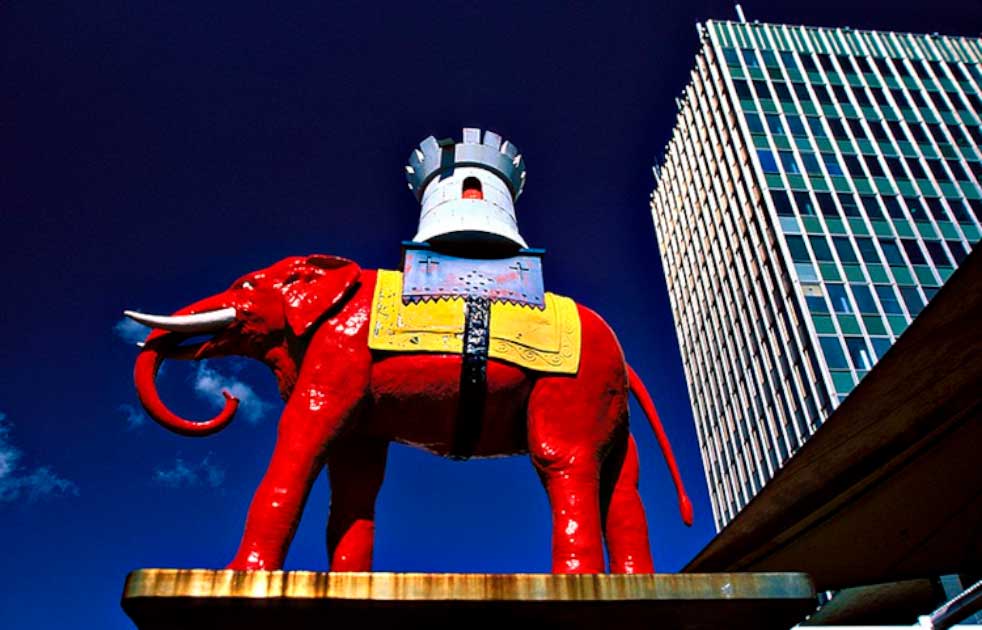
It also may have been due to their known alliance with the all-male Elephant and Castle Mob. Not only was the 40 Elephants one of the few women-only gangs in London at the time, but they were also prolific thieves and their leader, or ‘Queen’ as she was called, was the brilliant Alice Diamond.
An army, or in this case, a gang, is only as strong as its leader. Nobody was stronger than Alice Diamond, who became the head of the 40 Elephants in 1915 at the age of 20. She was called “Diamond Annie, the man-killing Amazon” by the press and was feared by store owners and many in the London organized crime scene.
Diamond Annie was a career criminal, and she had her first arrest at the young age of 17. Diamond was known to wear large diamond rings on each of her fingers and use them like brass knuckles when she ended up in a brawl.
- The Clink: The Oldest and Nastiest Prison in England?
- Jack The Ripper – First Celebrity Serial Killer
If her reputation and DIY-brass knuckles weren’t intimidating enough, Diamond Annie was also a very tall woman. She was said to have stood at a towering 5’9” (175 cm) during a time in history when the average height of men was only 5′ 6” (167 cm).
She would use her stature, notoriety, and penchant for wearing the finest clothes and furs to act as a decoy in stores so other members of the 40 Elephants could steal merchandise. At the same time, store employees were too busy watching the known gang leader to notice what was happening.
As the leader of the 40 Elephants, Diamond enforced strict rules all members were to follow, called the “hoister’s code”. This code included rules such as not drinking and going to bed early the night before a scheduled raid. Members must supply an alibi for any gang member who was arrested, and the women were not allowed to wear anything they had stolen.
The most important rule was that the Queen must approve of any member’s relationships with men. If a 40 Elephants member was dating someone, they had to be trustworthy and not turn their girlfriend into the police.
A 40 Elephants member named Marie Britten broke this rule in 1925. She married a man Diamond disapproved of and she was forbidden from running off with him. Britten did anyway, and then married him after falling pregnant.
Diamond Annie was furious. After a night of excessive drinking, she convinced several members to join her and attack Britten and her husband. The 40 Elephants broke into Britten’s home and, armed with bottles, rocks, and chunks of concrete, beat her husband while she was forced to watch. This attack became known as the Lambeth Riot and ended in the arrest of Diamond and her right-hand woman Maggie Hill (sister of notorious gangster Billy Hill).
Methods
The 40 Elephants had a very unique way of shoplifting that took advantage of the attitudes and clothing styles of the era. Women were given privacy when shopping by store employees in case they wished to try something on.
The 40 Elephants would use this “modesty” to fill secret pockets sewn into their coats, dresses, hats, bloomers, muffs, and cummerbunds. The women would joke that the name “40 Elephants” was because when the gang members would leave a store, they would look heavy/obese like an elephant from the hidden loot under their clothing.
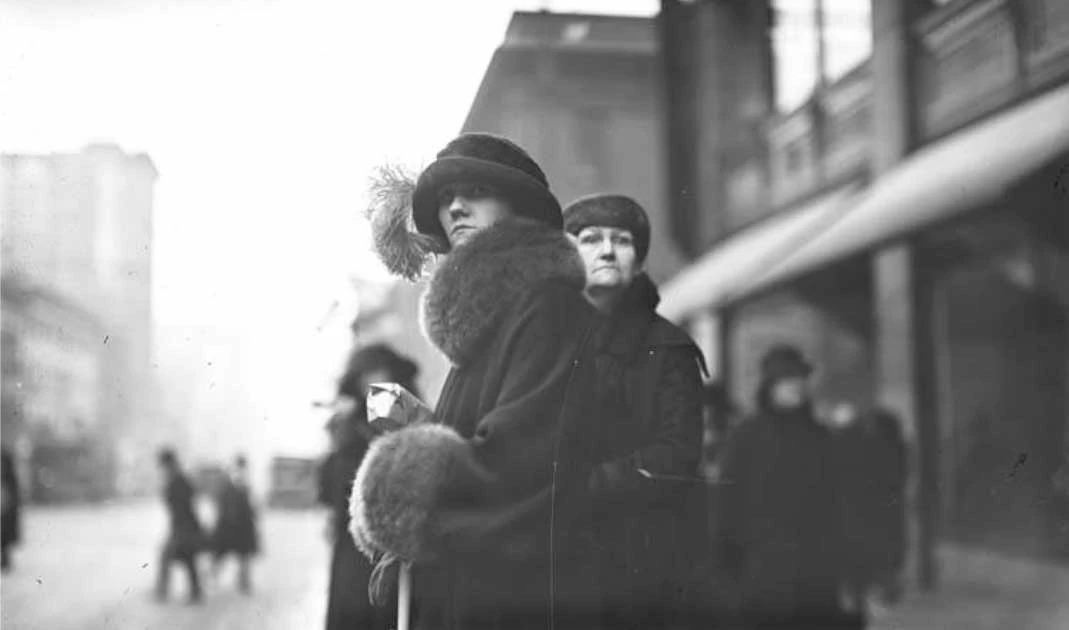
Due to the women wearing the latest and most expensive clothing, the gang appeared to be a group of proper and respectable ladies, and no one would assume they visited a store to rob them blind. One member of the 40 Elephants was known to wear a fake arm in her sleeve to disguise her real arm and hand that would be shoving merchandise into her many pockets.
Alice Diamond used a classic shoplifting method: she would wear an oversized coat into a store and take it off inside the store. She would set the coat down on a display while examining an item, then pick the coat up and move along. She was able to pick up the clothes that were underneath her coat without notice.
- England’s Great Outlaw, Robin Hood: Real or Legend?
- London’s Lost Peak: What on Earth was Whitechapel Mount?
Other techniques the 40 Elephants used to steal from stores included sticking chewing gum under the edge of a jewelry counter and asking to see different rings. The gang member at the counter would stick a ring to the gum and walk away, while another member walked by the counter to stealthily grab the ring from its hiding place.
If the first woman were accused of theft, she would be searched, but the police or store managers would not find the ring on her, and she was free to go. Diversions were a prevalent tool the women used to their advantage.
Swarming a counter and having multiple women ask to see makeup or jewelry allowed them to pass the item behind them, and so on, to eventually reach a 40 Elephants member on the outskirts of the swarm who would pocket the item and then leave. The employee at the counter would be flustered trying to help all the demanding women at once and would not notice an article being passed to the back of the crowd.
Another unique thing that the 40 Elephants did to aid them in their heists was utilizing high-speed cars to lead police away from the scene of a crime. The women would hand off the stolen items to an accomplice who would walk away as the police chased after the “suspicious” woman in the car.
It wasn’t just cars, either: the gang would ride the trains out of town and leave an empty suitcase at a train station. The bag would be used to hold the things they stole when they took the train back home and would appear to be typical contents of a suitcase.
The group was forbidden from wearing anything they stole to avoid suspicion; instead, they would sell the stolen goods to a fence for cash. This would prevent anyone from catching them with stolen items. Many members of the 40 Elephants would use false reference letters and names to be hired as a maid for a wealthy home and then rob their employers. Other women would entice a man into an affair and then blackmail him into giving her money, or she would ruin their reputation.
The Decline
When Diamond Annie was sent to jail following the assault during the Lambeth Riot, a new Queen of the 40 Elephants came into power. Member Lillian Rose Kendall became the Queen while Diamond was away.
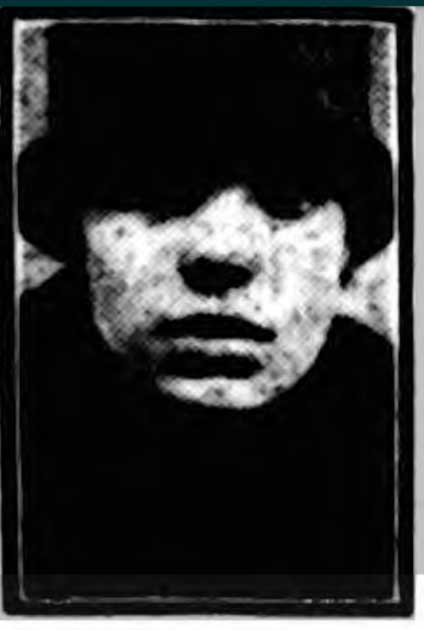
After an 18-month stint in prison, Diamond Annie was a free woman but knew her time as Queen was over. She opened a brothel and coached/mentored other female thieves until her death in 1952 from multiple sclerosis. That is why many people believe that the gang persisted until the 1950s.
The 40 Elephants members found it more challenging to steal via their standard methods as women’s clothing evolved and more form-fitting styles became popular. It has been rumored that one of Diamond’s protégées, a woman named Shirley Pitts, was named Queen in the 1960s, but the organization had grown much smaller than in its heyday. Some believe that the 40 Elephants officially disbanded in 1992 when Pitts died, but by that time, the 40 Elephants were no longer seen as a threat.
Regardless of the official end of the 40 Elephants’ crime sprees, the group was one of London’s most glamorous and prolific criminal operations during the early 20th century. An all-female gang was rare, and their successes are still recognized and spoken of today.
Top Image: With Diamond Annie as its queen, the 40 Elephants was one of the most notorious gangs in London. Source: WarpedGalerie / Adobe Stock.
By Lauren Dillon
References